
Home electrical inspections in Spokane
Something about the wiring doesn't sit right: an older house, a home inspector's note, an insurer's question, or a warm outlet. An electrical inspection tells you what's actually there and what, if anything, needs doing.
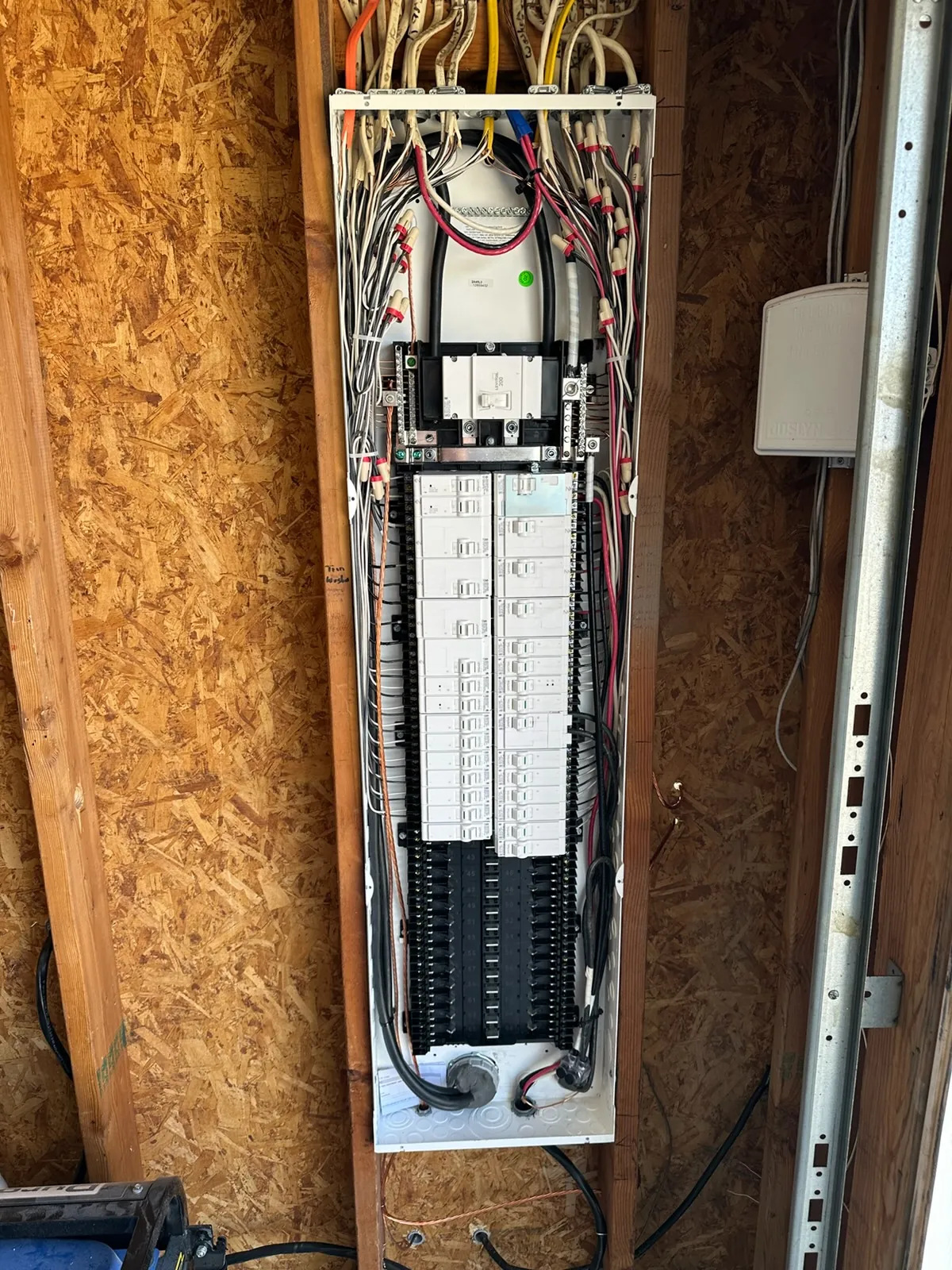
Whole-home surge protection
Your house is full of circuit boards now: the furnace, the fridge, the washer, the EV charger, the TV. A whole-home surge protector at the panel is a small job that protects all of them at once.
- Check the panel: We confirm there's a suitable spot and that the grounding and bonding the device relies on are sound.
- Choose the right device: A device rated for your panel and service, mounted as close to the panel as possible with short, direct leads.
- Install and verify: Installed to the manufacturer's instructions and the code as adopted in Washington, with its status indicator working.
- Show you what to look for: Most units have an indicator light. We'll show you what it means and what to do if it changes.
Grounding and bonding upgrades
Grounding is the part of your electrical system you never see and only notice when it's missing. If an inspector flagged it, or your home is older, we'll check it and bring it up to what your house actually needs.
- Find what's there: We trace the grounding electrode conductor, check clamps and connections, and look at what electrodes exist.
- Add or replace electrodes: Ground rods or other electrodes are installed and connected as the code requires.
- Bond the piping: Metal water piping and gas piping are bonded where required, including CSST per its manufacturer's instructions.
- Inspect and explain: The work is permitted and inspected where required, and we walk you through what changed.
About safety inspections
A general home inspection looks at a house broadly. An electrical inspection by a licensed electrician goes deeper: the panel, grounding and bonding, ground-fault and arc-fault protection, visible wiring, and the outlets and switches you use every day.
Spokane has plenty of older homes with a few generations of electrical work layered inside them. You get a clear, prioritized explanation so you can decide what to do and when.
People usually book an inspection when…
- They're buying an older home and want more than the general inspection.
- A home inspector or insurer flagged the panel or wiring.
- They've just moved in and don't know what previous owners did.
- They're planning a remodel, an EV charger or a hot tub.
- Lights flicker, breakers trip, or an outlet or switch feels warm.
What we look at
What we cover depends on the house and your concerns. An inspection typically includes:
- Step 1
Service and panel
Panel condition, breaker sizing against wire size, signs of overheating, double taps and labeling.
- Step 2
Grounding and bonding
The connection to earth and the bonding that keeps metal parts at the same potential.
- Step 3
Protection devices
GFCI protection in kitchens, baths, garages and outdoors, and arc-fault protection where it applies.
- Step 4
Visible wiring and devices
Outlets, switches and accessible wiring, including older wiring types like knob-and-tube or aluminum branch circuits.
- Step 5
A straight explanation
What we found, what's urgent, what can wait, and what's fine as is.
Code, safety and permits
What you can expect from us
No upselling by fear
If something is fine, we say so. If something is unsafe, we say that too, and why.
Prioritized findings
Safety issues first, then code and reliability issues, then nice-to-haves.
Plain English
You'll understand what we found, not just receive a list of code sections.
Not a permit inspection
This is a private evaluation for you. Permit inspections are done by the City of Spokane or Washington L&I on permitted work.
What shapes the inspection
Size and age of the home
Larger and older homes take longer.
Access
Attics, crawlspaces and finished basements affect what we can see.
Your concerns
A specific issue can be the focus, or we can look at the whole house.
Outbuildings
Detached garages, shops and hot tubs can be included.
Questions people ask about safety inspections
How is this different from a general home inspection?
A general inspector covers the whole house at a high level and often recommends an electrician for anything electrical. We're that electrician: we look closer, test more, and can tell you what a fix involves.
Do I get something in writing?
Tell us if you need written findings, for example for a purchase or an insurer, when you book, and we'll plan for it.
Will you fix things during the inspection?
Small, safe fixes are sometimes possible on the spot. Anything bigger we explain and quote so you can decide.
I'm buying a house with knob-and-tube wiring. Is that a deal-breaker?
Not necessarily, but it deserves a close look. Its condition, how much is still live and what's been modified all matter, and insurers often ask about it. An inspection gives you facts to negotiate with.
Can I ask about surge protection or grounding without booking an inspection?
Yes. Tell us what you want checked or installed and we'll quote just that.
Ready when you are
Tell us about your project.
Rather talk it through?
(509) 808-1925