
Subpanel installation for garages, shops and additions
You've got a shop, a detached garage, an ADU or a basement finish that needs real power, not an extension cord. A subpanel brings circuits to where you're working.
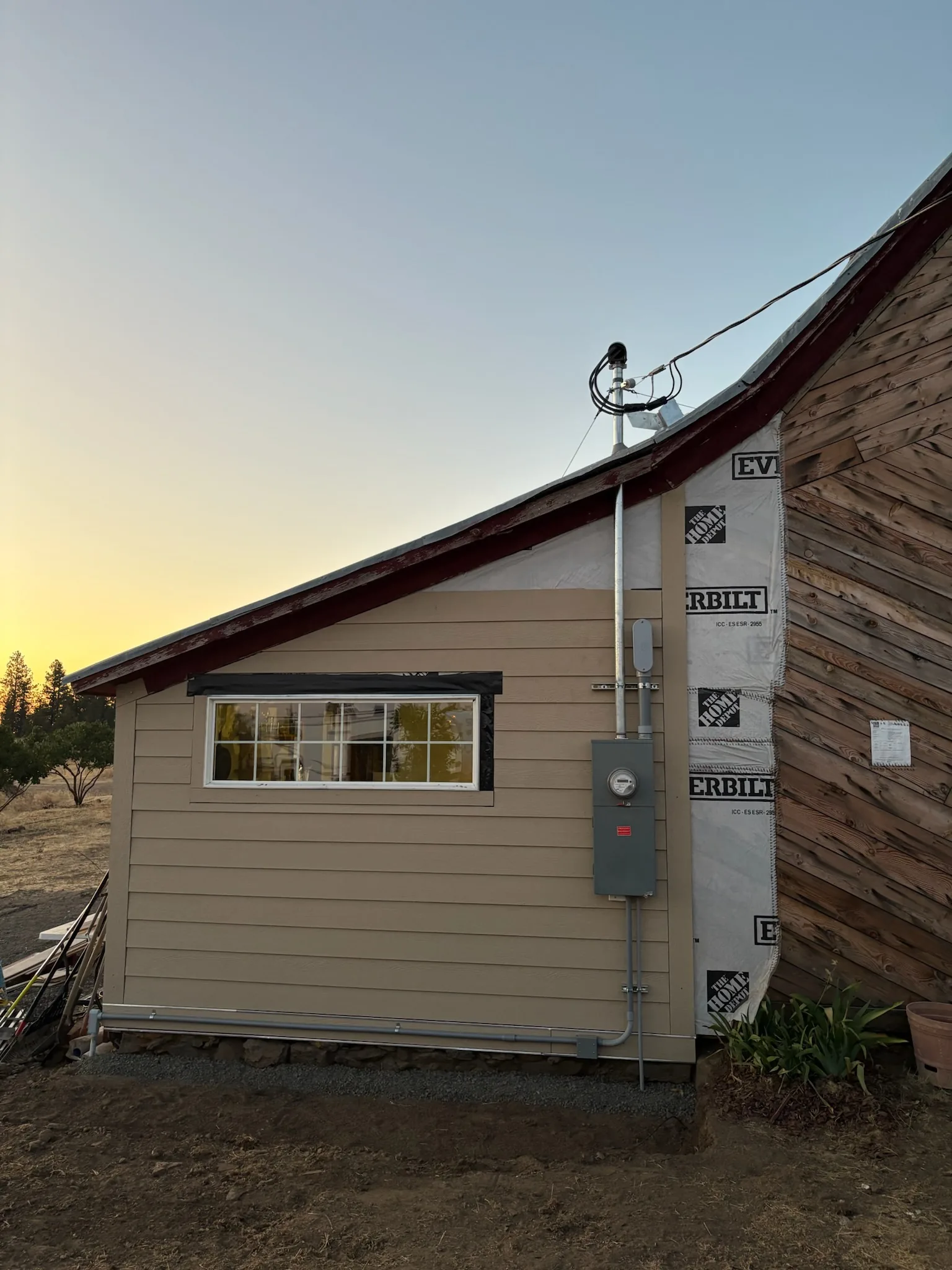
About subpanels
A subpanel is a second, smaller panel fed from your main one. It puts breakers close to where the power is used, and it makes sense when one area needs several circuits: a shop with a welder and a compressor, a detached garage with an EV charger and lights, a basement suite or an ADU.
Done right, it's one of the most useful upgrades a property can have. Done wrong, and we've seen plenty, it's a common source of shocks, nuisance trips and failed inspections.
A subpanel might be the answer if…
- You're running extension cords to a garage or shop.
- Your main panel has no space left but has capacity to spare.
- You're finishing a basement or adding an ADU or addition.
- You need 240-volt power for shop tools, a welder or a charger in an outbuilding.
- Breakers in the garage trip whenever two tools run at once.
What a subpanel installation involves
The main decisions are how much power the subpanel needs and how the feeder gets there.
- Step 1
Plan the load
We list what will run in the space now and later, and size the feeder and subpanel to suit, after confirming the main panel can supply it.
- Step 2
Route the feeder
Inside the house that might be through framing or a crawlspace. To a detached building it usually means a trench or an approved overhead route.
- Step 3
Set the subpanel
Mounted, grounded and bonded correctly, with a disconnect where the building requires one.
- Step 4
Permit and inspection
Subpanels and feeders need an electrical permit. We handle it and the work is inspected.
Code, safety and permits
Where subpanels usually go wrong
These details are easy to get wrong and they matter.
Neutrals and grounds kept separate
In a subpanel, the neutral and ground are isolated from each other. Bonding them together, as in a main panel, is a common and dangerous mistake.
Detached buildings get their own grounding
An outbuilding needs its own grounding electrode and a means of disconnect. We install both.
Feeder sized for the real load
Too small and it overheats or trips; we size it for what you'll run, with room to grow.
Buried runs done properly
Underground feeders use the right wiring method at the right depth with protection where they come out of the ground.
What affects a subpanel install
Distance and route
Trenching across a yard is a bigger job than a run through an unfinished basement.
Size of the subpanel
The amperage you need decides wire size, conduit and breaker.
Main panel capacity
If the main panel can't supply the feeder, that needs addressing first.
Surfaces in the way
Concrete, finished walls and landscaping all affect the route.
Questions people ask about subpanels
How big should my shop subpanel be?
It depends on what you'll run at the same time. A hobby garage and a working shop with a welder and compressor are very different. We size it from your actual list, and leave room for what's next.
Do I need a permit for a subpanel in Spokane?
Yes. A new feeder and subpanel need an electrical permit and inspection: through the City of Spokane inside the city, and usually Washington L&I elsewhere. We pull the permit.
Can a subpanel fix a full main panel?
Sometimes. If you're out of breaker space but your service has spare capacity, moving circuits to a subpanel can work. If you're out of capacity, a subpanel won't help; a service upgrade will.
Can you trench to my detached garage?
Getting the feeder there is part of the job. Tell us about the route (lawn, concrete, landscaping) and we'll plan it with you.
Often part of the same project
Ready when you are
Tell us about your project.
Rather talk it through?
(509) 808-1925