
Knob and tube replacement in Spokane
You love the old house. The original wiring, not so much. Maybe an inspector flagged it, maybe your insurer asked, or maybe you just want to stop wondering. We'll find out what's really in the walls and replace it without wrecking the character you bought the house for.
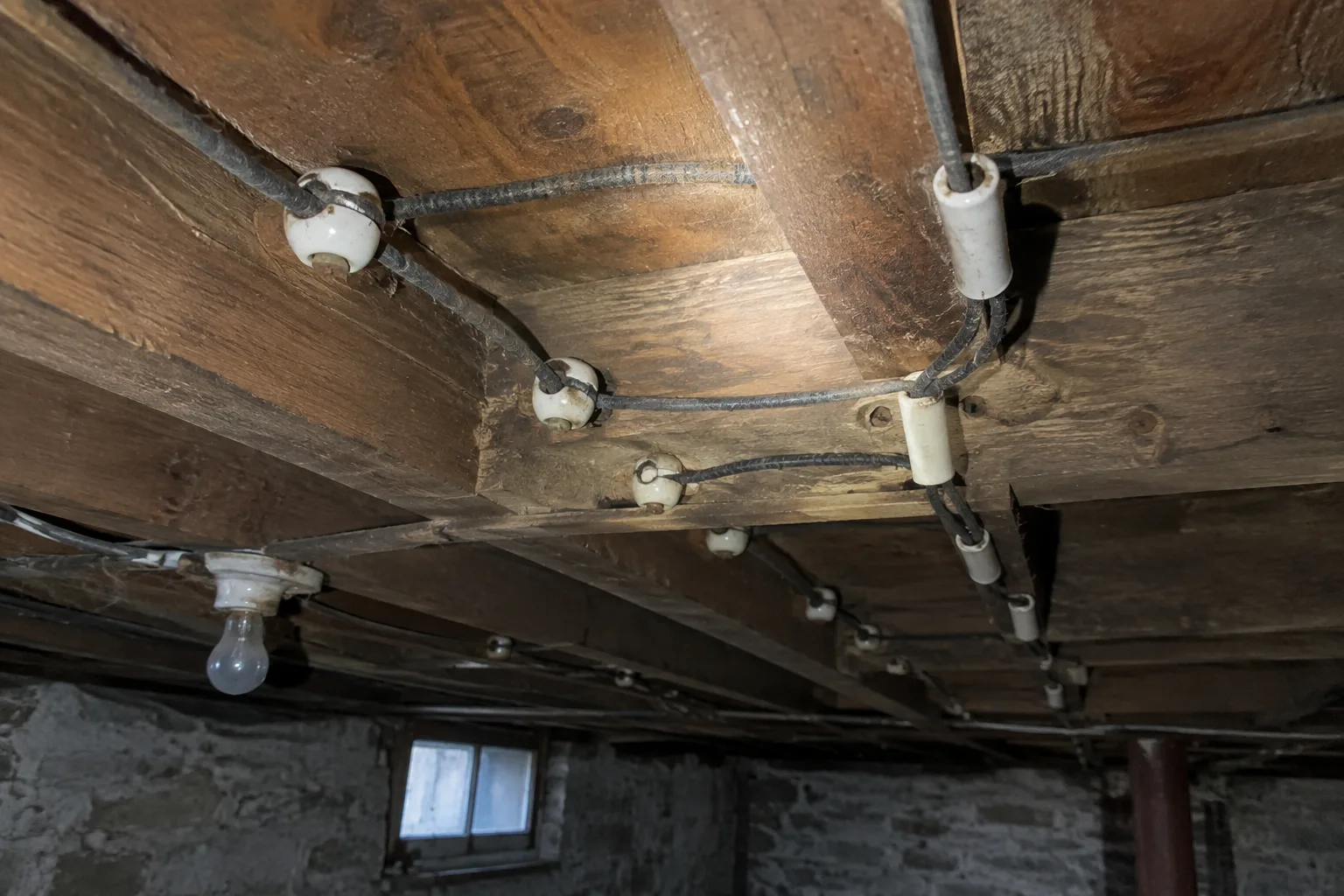
About knob & tube replacement
Knob and tube was the standard way to wire a house in the early 1900s, and Spokane has whole neighborhoods built in that era. It isn't automatically dangerous, but it was never designed for today's loads, it has no ground, and after a century of remodels it has often been spliced, extended or buried in insulation it was never meant to be covered by.
The harder questions are how much is still live, what can safely wait, and how to get new wire through finished plaster without tearing the house apart. We work those out first.
It's time to deal with it when…
- A home inspection, appraisal or insurer has asked about knob and tube.
- You can see porcelain knobs and tubes in the attic, basement or crawlspace.
- Your outlets are two-prong and there are few of them per room.
- You're adding insulation to the attic or walls (knob and tube must not be buried in it).
- You're planning a remodel and the walls will be open anyway.
How a knob and tube rewire works
Every old house is different, so the job starts with finding out exactly what's there.
- Step 1
Find out what's live
We trace which circuits are still knob and tube, which have been partly replaced, and where any risky splices or modifications are.
- Step 2
A plan you can choose from
A whole-house rewire at once, or in phases starting with the most important circuits. We lay out the options, and what each one costs you in disruption.
- Step 3
Fish new wire with care
We route new cable through attics, basements and existing cavities wherever we can, and keep openings in plaster and trim as few and as small as possible.
- Step 4
Permit, inspection and a clear record
Rewiring is permitted work. It's inspected, and you end up with a record you can show an insurer or a future buyer.
Code, safety and permits
Respect for the house
Old circuits properly retired
Abandoned wiring is disconnected at the source, so nothing is left live and forgotten in a wall.
Grounded outlets
New circuits are grounded, with GFCI and arc-fault protection where the code requires it.
Minimal openings
We plan routes to protect plaster, trim and original details, and tell you up front where openings are unavoidable.
Honest phasing
If some of the old wiring can safely wait, we'll tell you. If it can't, we'll tell you that too.
What shapes a rewire
How much is still live
A few remaining circuits is a very different job from a fully original house.
Access
Open attics, unfinished basements and crawlspaces make routing much easier.
Wall finishes
Plaster and lath takes more care than drywall.
Panel and service
An old fuse panel or small service is often replaced as part of the same project.
Questions people ask about knob & tube replacement
Is knob and tube wiring illegal in Washington?
Existing knob and tube isn't automatically required to be removed, but it can't be extended, it must not be covered by insulation, and many insurers won't cover a home with live knob and tube. Most owners replace it for those reasons.
Do you have to tear out all my walls?
No. Most rewires are done by fishing new cable through attics, basements and existing cavities, with small, planned openings where there's no other route.
Can I rewire in stages?
Often, yes. We can start with the highest-risk circuits, such as kitchens, bathrooms and anything near insulation, and plan the rest around your budget.
Do I need a permit to replace knob and tube?
Yes. Rewiring is permitted and inspected work: through the City of Spokane inside the city, and usually Washington L&I elsewhere. We pull the permit.
Ready when you are
Tell us about your project.
Rather talk it through?
(509) 808-1925